
The 2026 Government Shutdown Outlook: Key Dates and Pay Rules
If you work for the federal government or depend on federal services 2026 has already proven to be a year of extraordinary financial turbulence. The United States has experienced not one, but two government shutdowns before March even arrived. Two shutdowns of the U.S. federal government occurred in 2026, both arising from disputes in Congress about reforms to federal immigration enforcement following the killing of Alex Pretti by Customs and Border Protection (CBP) agents.
For millions of civil servants still mentally recovering from the record-setting 43-day shutdown of late 2025, the pattern feels relentless. Short-term continuing resolutions (CRs), last-minute deals, furlough notices arriving on Friday afternoons the cycle of uncertainty has become a defining feature of government employment in this era.
The 2026 Fiscal Landscape: A Year of Uncertainty
A Pattern Built on Short-Term Fixes
To understand what happened in 2026, you have to understand the fiscal environment that set the stage for it. The 2026 funding environment reflects a pattern that federal employees have grown accustomed to: short-term funding measures, political negotiations extending past deadlines, and ongoing uncertainty about long-term appropriations. Instead of passing a clean, full-year budget before October 1, Congress repeatedly kicked the can forward with continuing resolutions temporary patches that keep the lights on but solve nothing.
Fiscal Year 2026 began with the longest government shutdown in modern history, lasting from October 1, 2025 through November 12, 2025. That 43-day shutdown rattled financial plans across the federal workforce. When it ended in mid-November, the continuing resolution that reopened the government only extended funding through January 30, 2026 setting an immediate new countdown clock.
This “CR fatigue” isn’t just an emotional inconvenience. It has real financial consequences: delayed retirement processing, disrupted TSP contributions, paused benefit enrollments, and the constant background stress of not knowing whether next month’s paycheck will arrive on time.
What the 2026 Fiscal Calendar Looks Like
Here is the full chronological picture of what has happened and what federal employees should still watch:
| Date | Event |
|---|---|
| October 1, 2025 | FY2026 begins; full government shutdown starts due to lapsed appropriations |
| November 12, 2025 | Shutdown ends after 43 days; CR signed through January 30, 2026 |
| January 22, 2026 | House passes final six appropriations bills as a “minibus” package |
| January 24, 2026 | CBP agents kill Alex Pretti; Senate Democrats withdraw DHS support |
| January 30, 2026 | CR expires at midnight; partial shutdown begins January 31 |
| February 3, 2026 | House passes spending package (217-214); partial shutdown ends after 4 days |
| February 13, 2026 | DHS stopgap CR expires |
| February 14, 2026 | Second shutdown begins, affecting DHS only |
| February 22, 2026 | DHS suspends TSA PreCheck and Global Entry |
| September 30, 2026 | FY2026 ends; new funding deadline for FY2027 |
The Immediate Hurdle: The January 30, 2026 Deadline
How the First Partial Shutdown Began
The current Continuing Resolution was set to expire on January 30, 2026. Without new legislation, federal agencies would lose the authority to spend money, triggering a partial or full government shutdown.
The political trigger arrived on January 24, when CBP agents fatally shot American citizens during protests in Minneapolis. Senate Democrats said they would no longer support the Department of Homeland Security (DHS) bill, which funds CBP, favoring a continuing resolution to allow time for reform negotiations. This threw the entire funding package into jeopardy because the Senate had been voting on all six remaining bills together.
After a week of negotiations, Democrats and Republicans reached an agreement on January 29 to pass a package containing five of the bills plus a two-week continuing resolution for DHS.The Senate passed it, but the House didn’t act until February 3 — meaning a four-day partial shutdown was unavoidable over the weekend.
What the First Shutdown Impacted
A partial shutdown resulted in furloughs at the agencies not currently funded, including the Defense Department, Labor Department, Health and Human Services Department, Education Department, Homeland Security Department, Treasury Department, Transportation Department, Housing and Urban Development Department, State Department, the federal judiciary, and several executive branch offices.
Roughly 1.4 million federal employees were impacted by the partial government shutdown that began on January 30, 2026. At least 670,000 employees were placed on unpaid leave (furloughed), while approximately 730,000 employees were required to report to work but would not receive a paycheck during the shutdown period.
Federal agencies were set to reopen after the House approved a spending package funding those forced to close their doors, ending the shutdown less than four days after it began. All but the Homeland Security Department, which would be funded on a stopgap basis through February 13, would receive their full fiscal 2026 appropriation. When Congress voted to end the four-day partial government shutdown, lawmakers included language reiterating that all federal workers furloughed or forced to work without pay during the lapse would receive back pay.
Beyond January: Key 2026 Funding Dates
Government Shutdown February 2026 The DHS Partial Shutdown
The first shutdown was resolved. The second one was not so quick.
The U.S. Federal Government entered a limited shutdown at 12:01 a.m. on February 14, 2026, after Congress did not pass funding for certain federal operations. This shutdown impacts only employees of the Department of Homeland Security (DHS), including the Transportation Security Administration (TSA), the Federal Emergency Management Agency (FEMA), the Cybersecurity and Infrastructure Agency (CISA), U.S. Secret Service, U.S. Coast Guard, U.S. Immigration and Customs Enforcement, and U.S. Customs and Border Protection.
The root of the impasse was unchanged: Senate Democrats demanded immigration enforcement reforms including body cameras, warrant requirements, and use-of-force restrictions as the price of DHS funding. Republicans refused most of those terms.
Government Shutdown Update Week of February 22, 2026
After a week of being shutdown, the Department of Homeland Security announced it must take emergency measures to preserve limited funds and personnel. Those measures included:
- Global Entry suspended: As of 6:00 AM on February 22, 2026, U.S. Customs and Border Protection halted all Global Entry arrival processing at participating airports.
- FEMA scaled back: FEMA entered emergency operating status, scaling back to bare-minimum, life-saving operations only, ceasing all non-essential activities and focusing exclusively on immediate disaster response where there is an active threat to life. TSP PreCheck suspended: TSA suspended the PreCheck program at airports across the country.
About 95% of TSA employees are working without pay, increasing the risk of absenteeism, longer airport security lines, and potential flight delays.
TSA workers will only receive a partial paycheck on February 28 if the impasse is not resolved by then. They will miss their first full paycheck on March 14.
What Agencies Are Affected in the February 2026 DHS Shutdown?
| Agency | Status during DHS shutdown |
|---|---|
| TSA | ~95% working without pay; PreCheck suspended |
| FEMA | Emergency operations only; grants halted |
| CISA | Cybersecurity operations at limited capacity |
| U.S. Coast Guard | Operating without full resources |
| ICE / CBP | Largely funded via separate appropriations; operations mostly continuing |
| U.S. Secret Service | Essential personnel working without pay |
| All other federal agencies | Fully funded through September 30, 2026 |
All other areas of the federal government, including national parks and the Internal Revenue Service, remain open since they have been funded for the rest of the fiscal year.
Government Shutdown Vote Today, The House Has Acted
The House of Representatives passed H.R. 7744, the Department of Homeland Security Appropriations Act, 2026, with a vote of 221 to 209. However, as of the time of this writing, the Senate has not yet acted, and the DHS shutdown continues. Congress returned to Washington on February 23, with President Trump’s State of the Union scheduled for February 24 — a political moment that may accelerate a resolution.
September 30, 2026, The Fiscal Year End Deadline
Even if the DHS funding dispute is resolved, the larger fiscal calendar has one more major cliff: September 30, 2026 marks the end of Fiscal Year 2026. If full-year funding is not approved for FY2027, another shutdown threat may emerge.
Who Is Affected by Government Shutdown 2026?
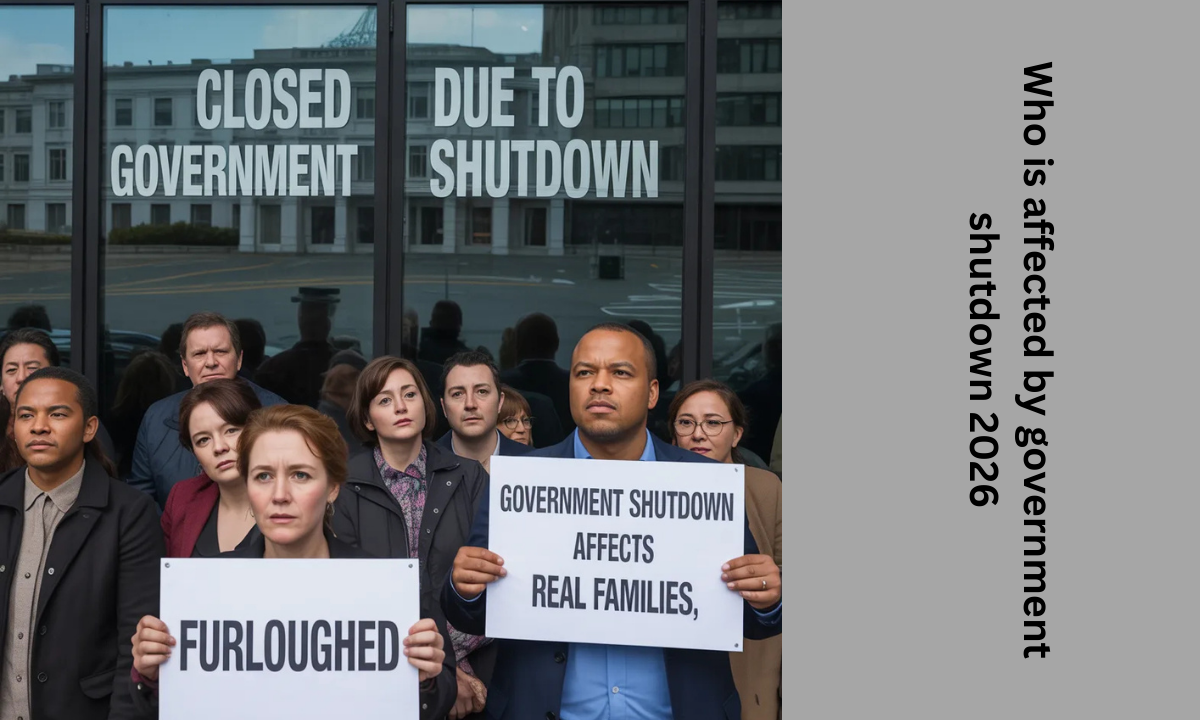
Not every federal employee experiences a shutdown the same way. The law divides workers into distinct categories, and understanding which category you fall into determines whether you go to work, stay home, and when you get paid.
Federal Employee Classification During a Shutdown
- Excepted Employees (Essential Workers)
These are employees whose work is legally required to continue because it protects life, property, or is authorized by specific law. Excepted employees continue working during a shutdown because their duties are necessary for the protection of life or property or are otherwise authorized by law. However, excepted employees typically work without pay until funding is restored.
Examples include: TSA officers, air traffic controllers, active-duty military, law enforcement, emergency medical personnel, and certain national security staff.
- Non-Excepted Employees (Furloughed Workers)
These employees are ordered not to report to work. Furloughed employees are not allowed to work and do not receive paychecks but are guaranteed back pay due to legislation passed in January 2019.
- Exempt Employees
These employees work for agencies that receive funding from sources other than annual discretionary appropriations — such as fees, mandatory spending, or multi-year appropriations. They are generally unaffected by a funding lapse. USCIS case processing continues because it is primarily fee-funded.
- Federal Contractors
This is the most vulnerable group. Government contractors will see zero protections for back pay unless the individual firm chooses to pay out of its own pocket. Unlike direct federal employees, the roughly 4 million contractors may face permanent loss of income if their projects were halted.
The “Do Not Work” Rule Federal Furlough Rules Explained
One of the most misunderstood aspects of a government shutdown is the strict prohibition on furloughed employees performing any work. This isn’t a suggestion — it is a federal law with consequences.
The Antideficiency Act
The legal backbone of the “do not work” rule is the Antideficiency Act (31 U.S.C. § 1341). Under this statute, federal agencies cannot obligate or spend funds that have not been appropriated by Congress. If a furloughed employee continues working — even voluntarily, even from home, even just answering a single email — the agency is technically incurring an unauthorized obligation.
The practical rules for furloughed employees are:
- No work of any kind. Do not check work email, answer work calls, or log into government systems.
- Retain your government devices, but do not use them for official business. Returning equipment is generally not required unless your agency specifically directs otherwise.
- You remain a federal employee. Ethics rules still apply. Furloughed employees cannot take outside employment that would be prohibited under normal circumstances.
- You may apply for state unemployment benefits. However, if you later receive back pay for the same period, those unemployment benefits must be repaid.
While on furlough, an individual remains an employee of the Federal Government. Therefore, executive branch-wide standards of ethical conduct and rules regarding outside employment continue to apply when an individual is furloughed.
Can You Take Another Job During a Furlough?
Before engaging in outside employment, employees should review applicable regulations and then consult their agency ethics official to learn if there are any agency-specific supplemental rules governing the employee. Many agencies require prior approval for secondary employment even in normal times that requirement doesn’t disappear during a furlough.
Shutdown Cheat Sheet: Pay, Benefits, and Survival
Back Pay Are You Guaranteed to Be Paid?
The short answer is yes, but 2026 introduced unprecedented complexity around this guarantee.
Federal employees are legally entitled to retroactive pay. Under 31 U.S.C. § 1341(c), both “excepted” workers required to work without immediate pay and “furloughed” staff must be compensated at their standard rate.
The legal foundation is the Government Employee Fair Treatment Act of 2019 (GEFTA), passed in the wake of the 2018-2019 partial shutdown. GEFTA established that back pay is automatic and does not require a separate congressional vote each time. However, in 2026, this long-standing interpretation was directly challenged:
The Trump administration continued to assert that federal workers aren’t guaranteed back pay despite federal law explicitly assuring it. Office of Management and Budget Director Russell Vought began insisting that GEFTA does not guarantee federal workers back pay automatically and that Congress still must authorize back pay payments for furloughed employees.
In response to this challenge, when Congress voted to end the four-day partial shutdown, lawmakers included language reiterating that agencies “shall” use funds to pay federal workers as outlined in the 2019 Government Employee Fair Treatment Act, explicitly guaranteeing back pay.
What Happens to Your Health Insurance?
Federal employee health benefits (FEHB) continue during a shutdown. The government’s share of premiums continues to be paid even when paychecks are delayed. If the shutdown extends long enough that a pay period is missed entirely, employees may owe their premium share upon return — it is typically deducted from the first paycheck after the lapse ends.
What About Retirement?
Government shutdowns do not eliminate pay or retirement benefits back pay is guaranteed by law but payroll timing, TSP contributions, and retirement processing may be disrupted until funding is restored. FERS and CSRS pension calculations are not negatively affected by furlough periods, as shutdown furlough days typically count as creditable service for retirement purposes.
State Unemployment Insurance for Federal Employees
Furloughed federal employees may apply for state unemployment benefits during a shutdown. Key rules to know:
- File as soon as you receive your furlough notice — do not wait.
- You must report your federal employment status honestly.
- Under the Government Employee Fair Treatment Act of 2019 (GEFTA), federal employees will receive back pay for furlough periods once funding is restored. Any unemployment benefits received for the same time period will be considered overpayments and must be repaid. Federal agencies may deduct unemployment benefits from back pay directly or reimburse the state labor department on your behalf.
Financial Survival Tips for a Prolonged Shutdown
- Contact your mortgage servicer or landlord immediately. Many lenders have hardship programs specifically for government employees during shutdowns.
- Pause non-essential subscriptions and automatic payments to preserve cash flow.
- Tap your emergency fund first, don’t go into high-interest debt if you can avoid it.
- Check FEEA: Be sure to check the Federal Employee Education and Assistance (FEEA) website for grants and loans available to federal employees during a shutdown.
- Talk to your union representative if you are represented — they may have access to emergency hardship funds or negotiated protections.
- Know your agency’s specific shutdown plan some agencies allow employees to use annual leave or have other arrangements that differ from the general rule.
Frequently Asked Questions (FAQs)
Q: Will furloughed federal employees receive back pay for the 2026 shutdowns?
For the January 31 – February 3 partial shutdown, Congress explicitly guaranteed back pay in the bill signed by President Trump on February 3, 2026. For DHS employees in the second shutdown, back pay depends on the legislation that ultimately ends that lapse.
Q: What is the difference between a furloughed and an excepted employee?
Furloughed employees are sent home and cannot work, while excepted employees must continue reporting to duty — both go without pay until funding is restored.
Q: Can I check my work email if I am furloughed?
No. The Antideficiency Act prohibits performing any work, including checking email, unless specifically authorized by your agency.
Q: Does my health insurance continue during a shutdown?
Yes. FEHB and FEDVIP coverage continue during a furlough. Unpaid premiums are deferred and collected from your paycheck once you return to pay status.
Q: Can my agency change my excepted/furloughed status mid-shutdown?
Yes. Agencies can and do adjust individual employee status as operational needs evolve during a lapse. You should stay in contact with your supervisor throughout any shutdown.
Q: Can federal employees file for unemployment during a shutdown?
Yes, furloughed employees can file for state unemployment benefits, but any benefits received must be repaid when back pay is issued.
Q: Where can federal employees get emergency financial help during a shutdown?
The Federal Employee Education and Assistance Fund (FEEA) offers emergency grants and low-interest loans to qualifying federal employees during shutdowns.
Conclusion
The 2026 government shutdown story is still being written. What is already clear is that this fiscal year has delivered two shutdowns before spring, with a third potential lapse looming at the end of September. The immediate focus is resolving the ongoing DHS-only partial shutdown, where tens of thousands of TSA officers, Coast Guard personnel, FEMA workers, and others are performing essential duties without receiving their full paychecks.
The appropriations cycle will continue to produce these moments of crisis until Congress changes its budgeting habits. Until then, knowledge of the law, the timeline, and your own financial position is your most powerful tool.

